Does the V. A. Pay Family Members to Take Care of Veterns at Home
The VA Plan of Comprehensive Help for Family Caregivers
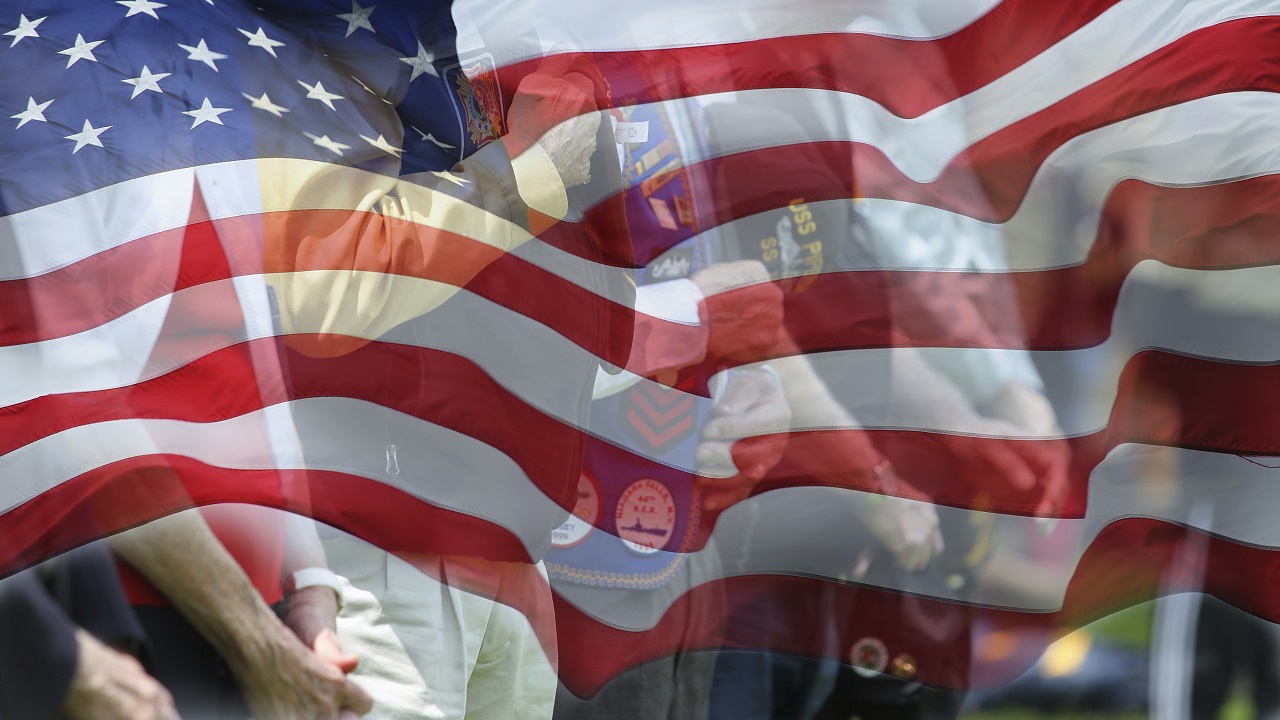
The combination of service-connected disabilities and advancing age takes a serious toll on elderly veterans in this country. Every bit their health and functional abilities decline, veterans' family unit caregivers struggle to provide quality care and assistance them age in place for every bit long as possible. Fortunately, the growing need for amend caregiver support was recognized in the MISSION Deed, a VA reform bill that was signed into law in 2018.
While this bill included many measures intended to better health care and medical benefits that veterans receive through the U.Due south. Department of Veterans Affairs (VA), it too prepare out to strengthen supports for veterans' family caregivers. After a long wait, the VA expanded the Program of Comprehensive Assistance for Family Caregivers (PCAFC) on October one, 2020.
What Is the VA Plan of Comprehensive Assistance for Family Caregivers?
The PCAFC provides a broad range of supportive services and resources to family caregivers of veterans. Eligible veterans are permitted to select one primary caregiver and up to two secondary caregivers who can receive benefits through this program. Both eligible master and secondary caregivers can receive caregiver didactics and training, mental health services and counseling, and travel, lodging, and fiscal assistance when traveling with the veteran to receive care.
Primary caregivers are also entitled to a few additional benefits that are particularly useful, including a monthly VA stipend, access to health care benefits through the Civilian Wellness and Medical Programme of the Department of Veterans Affairs (CHAMPVA) if they don't already qualify for another health care plan, financial planning and legal services, and at least 30 days of respite care per yr.
Who Qualifies for the VA Caregiver Program?
Prior to October 1, 2020, only post-ix/11 veterans who incurred or aggravated a serious injury in the line of duty in the active military, naval, or air service AND required personal care services related to this injury could qualify for the PCAFC.
The MISSION Act expanded this program to also include eligible veterans who incurred or aggravated a serious injury, illness or disease in the line of duty in the active war machine, naval or air service on or before May 7, 1975. This means that WWII, Korean War and Vietnam War veterans (and their caregivers) may now qualify for VA caregiver support services through the PCAFC. Unfortunately, veterans who were seriously injured in the line of duty between May 7, 1975, and September 10, 2001, will non become eligible for the PCAFC until a second expansion goes into upshot October ane, 2022.
When determining eligibility, there is no longer a need for a connection between personal care services and the qualifying serious injury. According to a VA PCAFC Factsheet, "In nearly cases, the eligible veteran has multiple weather that may warrant a need for personal intendance services. Veterans' needs may be then complex that it can be difficult to determine what specific status, out of many, causes the need for personal care services." This change makes information technology much easier for veterans and their families to qualify for the PCAFC, even if their needs are not directly related to service-continued injuries.
Specific eligibility criteria for both veterans and family caregivers are detailed below.
PCAFC Requirements for Veterans
- The individual must either be a veteran OR a member of the Armed Forces undergoing a medical discharge.
- The veteran or service member must take a serious injury or serious illness, which is a single or combined service-connected disability rating of 70 percent or more.
- The individual must take a serious injury or affliction incurred or aggravated in the line of duty in the agile military, naval, or air service on or subsequently September 11, 2001, OR on or before May 7, 1975.
- The private needs in-person personal care services for a minimum of vi continuous months based on an inability to perform at least ane activity of daily living (ADL) OR needs continuous supervision, protection, or instruction. The "inability to perform an ADL" ways the veteran or service member requires personal care services each time they complete one or more of the ADLs. Only needing occasional assistance with one or more ADLs does not run into the definition for eligibility. (The VA'south accepted ADLs are covered in greater detail afterwards on in this article.)
- It is in the best interest of the individual to participate in the program.
- Personal care services that would be provided past the family caregiver will non exist simultaneously and regularly provided past or through another private or entity.
- The private receives care at home or will exercise so if the VA designates a family unit caregiver.
- The individual receives ongoing care from a primary care squad or will do then if the VA designates a family caregiver.
PCAFC Requirements for Family Caregivers
An eligible family caregiver must:
- Be at least 18 years of age.
- Be either the eligible veteran'southward spouse, son, daughter, parent, stepfamily member, or extended family member OR someone who lives with the eligible veteran full-fourth dimension or will do so if designated as a family caregiver.
- Be initially assessed by VA as being able to complete caregiver pedagogy and training.
- Complete caregiver training and demonstrate the ability to bear out the specific personal care services, core competencies and boosted care requirements.
- Not accept whatsoever determinations by the VA of corruption or neglect of the eligible veteran.
Agreement the VA Caregiver Stipend
An important aspect of the PCAFC is the financial aid it provides to eligible veterans' primary caregivers. Expansion of this plan means that more family unit members tin can become paid caregivers for their disabled veterans. This change is noteworthy because it increases the likelihood that crumbling vets have the support and supervision they demand to go on living in their ain homes and communities for as long as possible.
There are two levels of payment that are based on the corporeality and degree of personal services a caregiver provides. The VA measures these services in terms of whether a veteran is "non unable to cocky-sustain in the community" or "unable to self-sustain in the community."
Primary family unit caregivers caring for veterans who are not unable to self-sustain in the community are entitled to a Level i stipend, which is 62.5 percent of the total available monthly stipend rate. Those primary caregivers who care for veterans who are unable to self-sustain are entitled to the Level 2 stipend, which is 100 percentage of the available monthly charge per unit.
These PCAFC monthly stipend rates vary depending on the locality pay area where the veteran lives and are adjusted annually by the Office of Personnel Management (OPM). For example, the charge per unit for a master caregiver to a veteran who qualifies for the lower Level 1 stipend and lives in Minneapolis in 2022 would be entitled to approximately $1,815.83 per month ($21,790 annually), whereas a Level 2 stipend caregiver in Minneapolis would receive approximately $2,905.33 per month ($34,864 annually).
This is a game changer because these benefits are not demand-based like VA pensions, and the funds are disbursed directly to the family caregivers of eligible veterans. Furthermore, PCAFC stipend payments are nontaxable benefits.
Defining Inability to Self-Sustain in the Customs
Per the VA, "unable to self-sustain in the community means that an eligible veteran either:
- Requires personal intendance services each fourth dimension they complete at to the lowest degree three of the seven activities of daily living (listed below), and is fully dependent on a caregiver to complete such ADLs; OR
- Has a demand for supervision, protection, or didactics on a continuous ground. This means the veteran or service member "has a functional damage that directly impacts their ability to maintain their personal safety on a daily basis." (Alzheimer's affliction and other forms of dementia are proficient examples of weather condition that require a caregiver to provide continuous supervision, protection and/or instruction.)
ADLs the VA Recognizes for PCAFC Eligibility
- Dressing and undressing
- Bathing
- Grooming oneself in society to keep oneself make clean and presentable
- Adjusting any special prosthetic or orthopedic appliance that by reason of the particular disability cannot be done without assist (this does non include the adjustment of appliances that nondisabled persons would be unable to conform without aid, such as supports, belts, lacing at the back, etc.)
- Toileting or attending to toileting
- Feeding oneself due to loss of coordination of upper extremities, extreme weakness, inability to swallow, or the need for a not-oral means of nutrition
- Mobility (walking, going up stairs, transferring from bed to chair, etc.)
How Can a Veteran and Their Caregiver Apply for the PCAFC?
Veterans and their family unit caregivers will need to apply for this plan together. Applications can exist filed online at VA.gov, or applicants can download and complete a articulation Awarding for the Program of Comprehensive Assistance for Family Caregivers (VA Form 10-10CG). The paper application must either be submitted by mail or hand delivered to your local VA medical eye'southward Caregiver Support Coordinator. If a veteran has a courtroom-appointed legal guardian, representative or durable ability of attorney (POA), the representative must sign on behalf of the veteran and include a copy of the valid POA document or guardianship paperwork.
You can apply the Caregiver Back up Coordinator'due south directory or call the Caregiver Support Line at 855-260-3274 to notice contact information for your local coordinator. These coordinators are licensed professionals who tin assistance veterans and caregivers explore the benefits they are eligible for and help with applications and appeals. A consummate list of VA caregiver supports and resources tin be found on Caregiver.VA.gov.
Source: https://www.agingcare.com/articles/va-expands-program-of-comprehensive-assistance-for-family-caregivers-461974.htm
0 Response to "Does the V. A. Pay Family Members to Take Care of Veterns at Home"
Post a Comment